
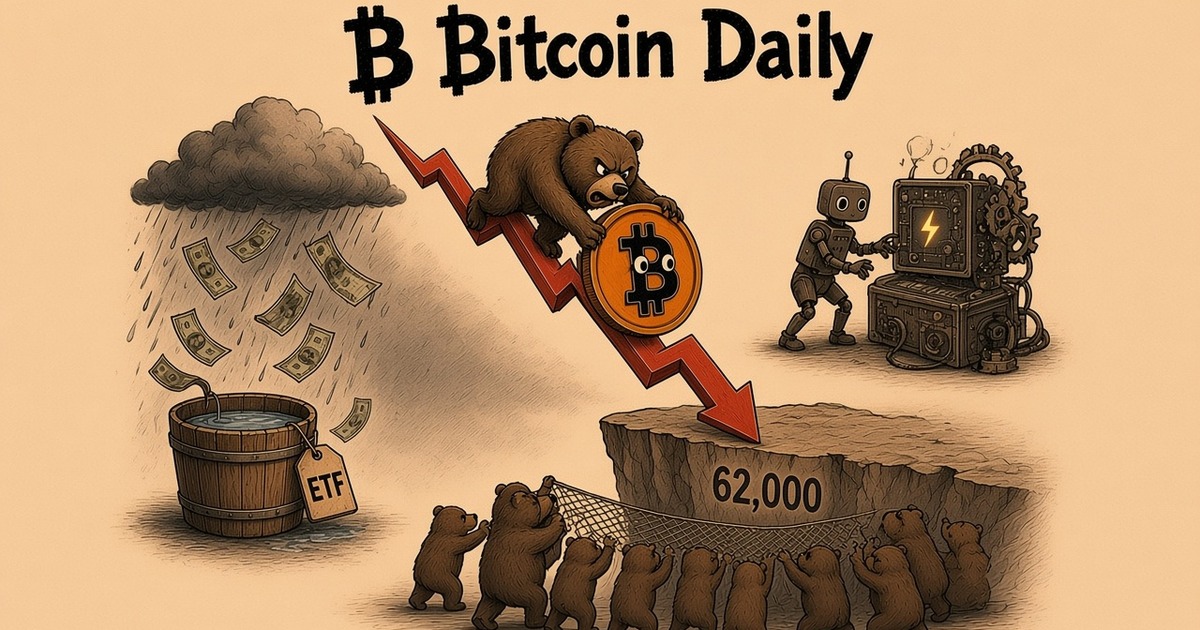

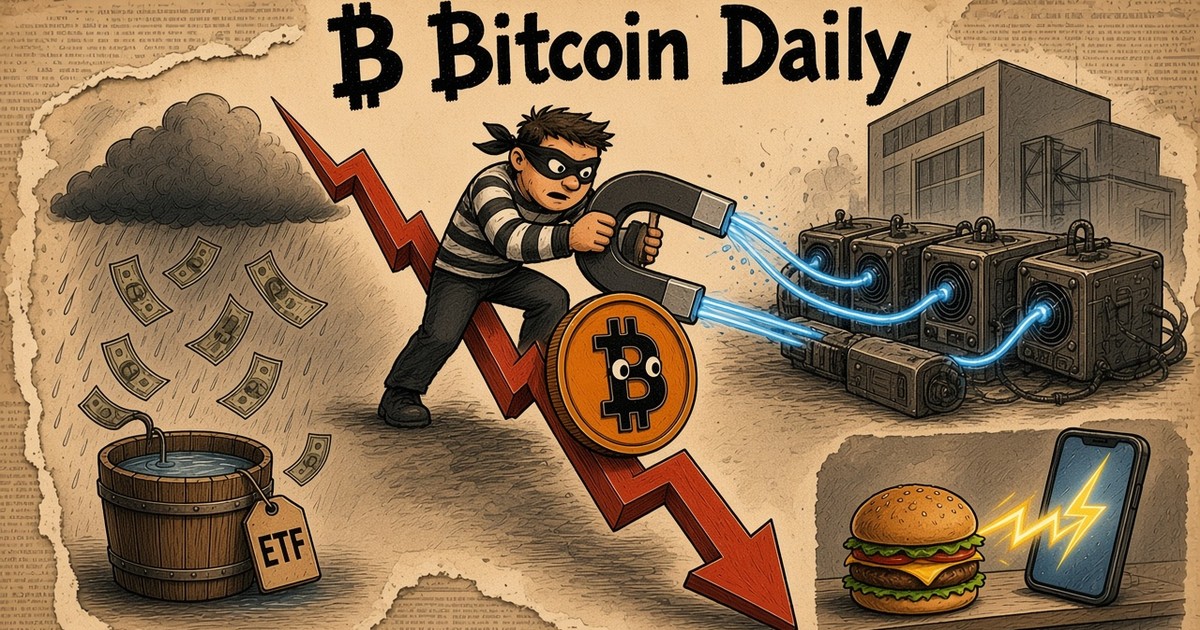
Saturday brought no weekend calm, but a three-month low: Bitcoin slipped at times to just over $62,000, and on Sunday morning it costs $64,933. Markets are now pricing a December rate hike by the US Federal Reserve as almost certain, the spot ETFs are losing more than a billion dollars a week for the second time in a row, and options traders are amplifying every move. Meanwhile in Germany the Bundestag is deciding that customs may seize bitcoin of unexplained origin even without a criminal proceeding.
On Saturday evening Bitcoin stood at $63,602, a decline of 6.9 percent in 24 hours, 14.8 percent in a week and 21.5 percent in a month. Overnight into Sunday the price then recovered back toward $65,000.
Why it is going down#
The main suspect is once again the US Federal Reserve. The CME FedWatch Tool assigns a probability of 88.5 percent to a 25-basis-point rate hike at the meeting on December 8 and 9; 11.5 percent even falls on a half percentage point. Nothing is left for unchanged rates or a cut.
And then there is the leverage. Glassnode warned on Saturday: “The BTC price is approaching a massive liquidation cluster. The August breakout left these long entries behind.” That could be “the accelerant for a final capitulation flush.” According to Glassnode, the largest accumulation of possible forced closings lies between $59,500 and $62,600.
Companies with bitcoin on the balance sheet#
Michael Saylor is trying optimism. He wrote on X: “Bitcoin is digital capital. Strategy turns it into digital credit. Over the past month Bitcoin fell 17.3%. The price of STRC remained virtually unchanged.”
The preferred stock, currently with a twelve percent variable dividend, thus produced a gain of one percent. The flip side: at $64,428, Strategy’s 850,364 BTC would be worth around $54.8 billion – against acquisition costs of $64.16 billion. On November 30, Strategy and Metaplanet will also be dropped from MSCI indexes.
Things are going worse at Nakamoto, they owe Kraken $165 million, more than the market capitalization of $104 million.
Germany: customs may reach in, the holding period keeps wobbling#
While prices are falling, the state is arming up. On Thursday the Bundestag passed the Customs Financial Justice Act. Customs may thus seize “significant assets” – especially from a value of €100,000 – even without an initial criminal suspicion, if there are actual indications of an unlawful origin. Bitcoin is expressly covered. The federal government takes the view that “almost every law-abiding citizen” can explain where their wealth comes from.
At least: unexplained origin alone is not enough for a final confiscation.
On tax there is half an all-clear. An abolition of the one-year holding period as of January 1, 2027 is considered unlikely because of the tight parliamentary schedule. FDP veteran Frank Schäffler puts it in a nutshell: “This is good news. But it is a postponement, not a cancellation.” An interesting piece by Diego Faßnacht recalls that real estate in good locations in large German cities has lost 25 to 30 percent in real terms over five years: “Anyone who wants to protect wealth should choose better paths.” We would have an idea for that. (even if that is not going so well right now :-)
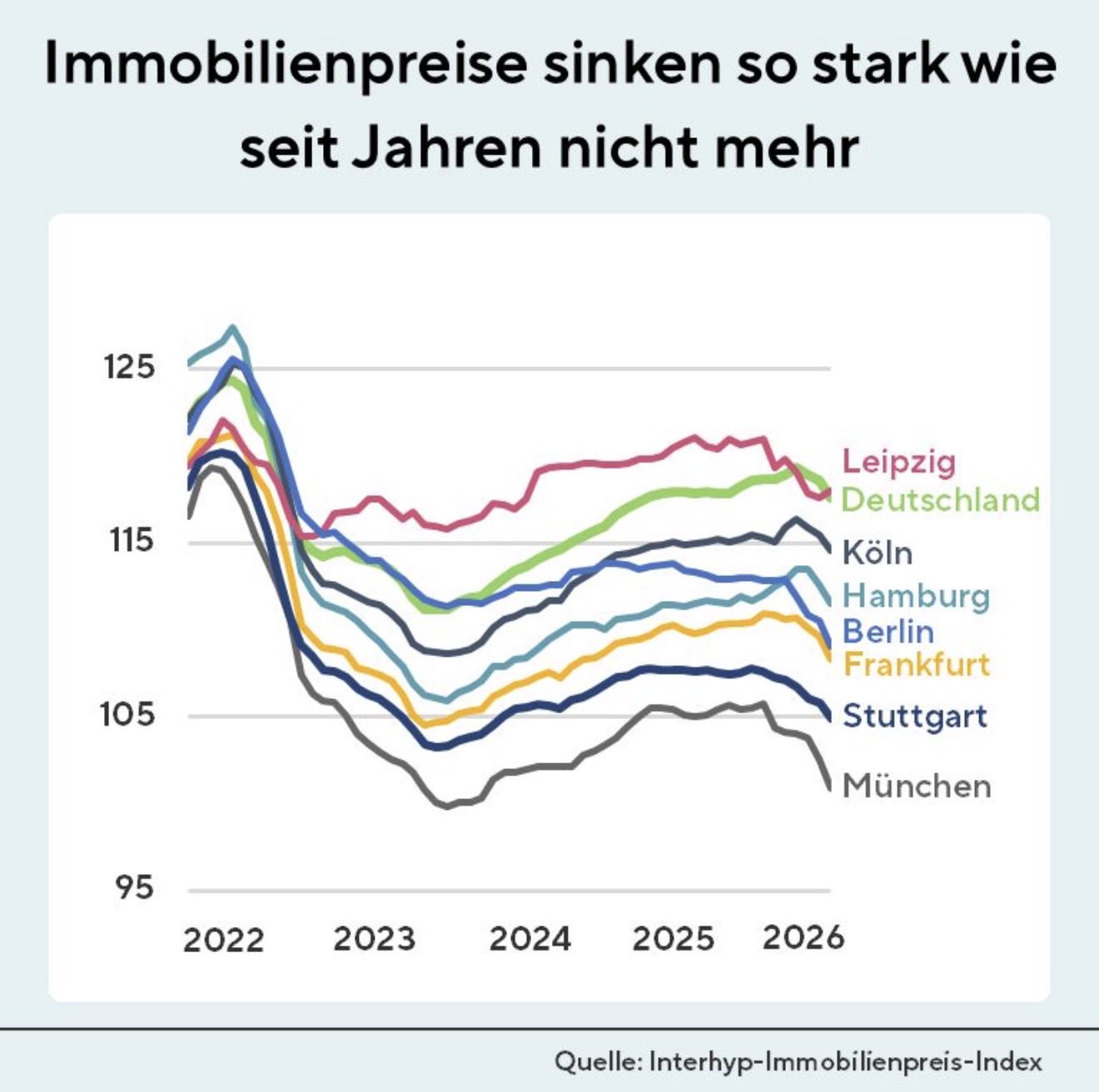
My investment tip is still: real estate in Stuttgart or Wolfsburg
Who is staying bullish#
On-chain analyst James Check sees “the fourth capitulation event since the all-time high.” What is being sold, he says, is mainly coins of people who in September, at over $80,000, got in for fear of missing out: they are now selling “exactly at the price they would have wished for three months ago.” He speaks of a “Deep Value” zone – that this is a bottom is not guaranteed.
Analyst Root (@therationalroot) also, in his newsletter, regards a “first higher low” as more likely than a new cycle bottom, but names as the worst case the “Heavily Undervalued” level at around $48,000.
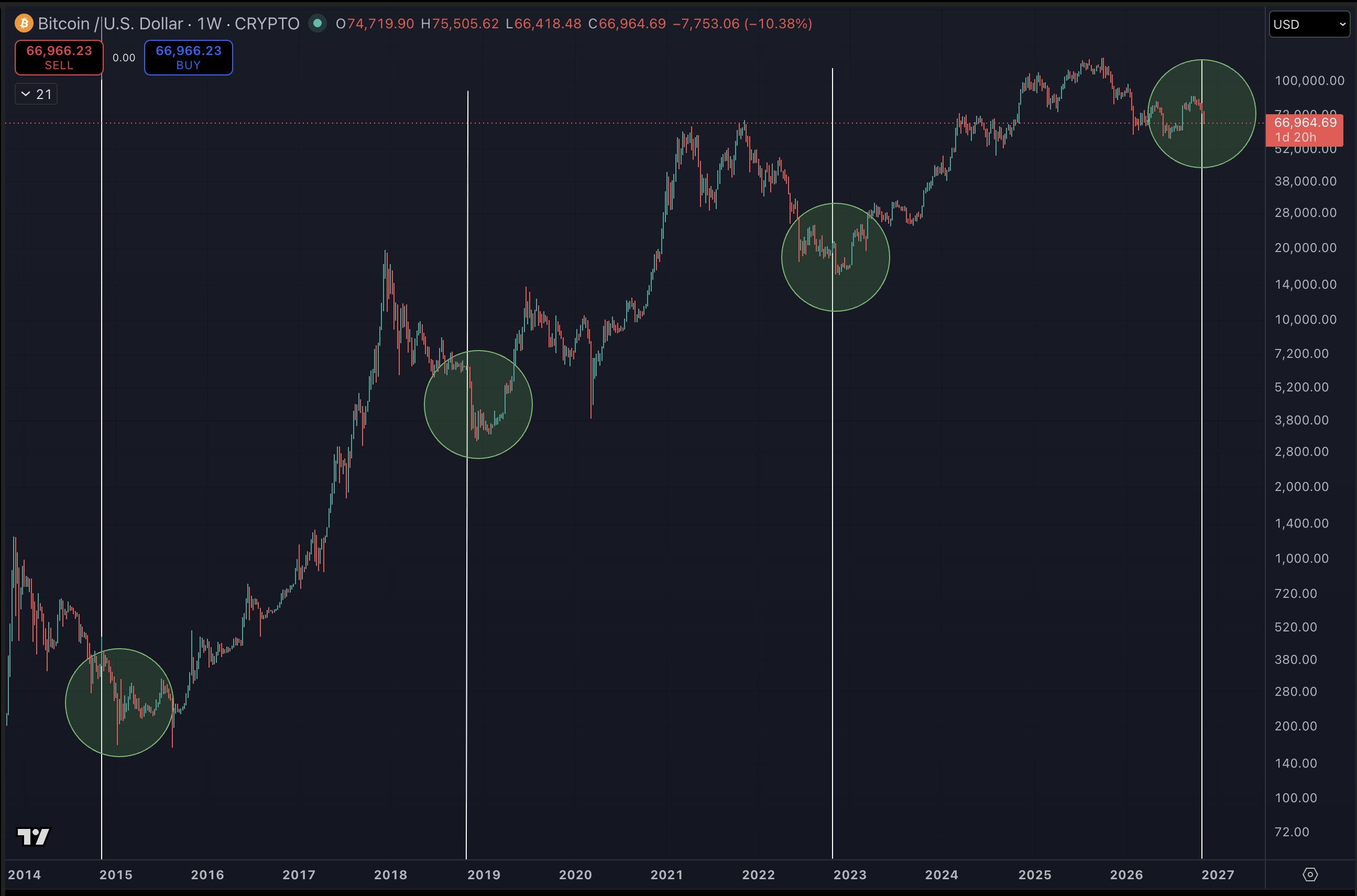
Benjamin Cowen recalls that Bitcoin has historically capitulated into its cycle low “sometime after the US midterms.”
What’s ahead#
On November 30, Strategy and Metaplanet will be taken out of the MSCI indexes; index funds will then have to sell. On December 8 and 9 the Fed decides on rates – the market is firmly counting on a hike.
Tech
P2Poolv2 takes the lever away from the pools, Core Lightning patches a crash bug, and AI agents pay with Lightning
The price is falling, the developers keep building – as always. A new P2Pool project wants to shift mining-pool accounting onto every single node and thereby remove the last lever for censorship. Core Lightning has disclosed a denial-of-service vulnerability that could crash nodes. Floresta now runs as a slim Utreexo node on the desktop, and Lightning Labs is showing a coding agent that pays for its own compute time.
P2Poolv2: the accounting belongs to everyone#
On Saturday, P2Poolv2 was presented on Stacker News – “permissionless mining, auditable accounting, self-custodial payouts.” The idea: a mining pool in which not one operator, but every node, keeps the books on the submitted shares. Each “share” is a real Bitcoin block with a lower difficulty target; a new one is added about every ten seconds. Every node replicates the share chain, recalculates the PPLNS window and checks the coinbase payouts. Rewards land directly in the coinbase or via atomic swap at a key the miner controls themselves.
The reasoning is what makes it interesting. DATUM and Stratum V2 do allow miners to build their own block templates, but leave the accounting with the pool server. The project page puts it this way: a pool operator is a company in a jurisdiction, and companies can be put under pressure. Anyone who tells a pool which transactions it may confirm does not have to reject a template – they simply stop counting the shares. “Accounting is the lever,” it says there. P2Poolv2 wants to abolish that lever. Compared with the original P2Pool, which failed because of orphaned shares and limited coinbase outputs, v2 uses a graph instead of a linear chain: shares can reference up to three “uncles,” and delayed honest work is paid at a discount. For anyone who does not merely invoke censorship resistance at conferences, this is one of the most interesting projects of the year.
#
On Delving Bitcoin, a denial-of-service vulnerability in Core Lightning was disclosed on Saturday that is fixed in version 26.06.8. Affected were versions 0.12.0 through 26.06.7: they accepted a channel open that reused the funding outpoint of another channel, so that two channels shared the same channel ID. If both were active, a reconnect crashed the node – free of charge for the attacker and repeatable on every restart. If the first channel was already closed, closing the second led to a crash loop that only an update ended. The bug was found by the fuzzing tool smite. Anyone running a CLN node: update. Money was not directly at risk, but availability was.
Floresta on the desktop#
According to @btcinsider__, Floresta, the slim Utreexo Bitcoin node, can now also be run as a desktop application thanks to the work of Cristian Solutchak. Utreexo replaces the full UTXO database with a compact accumulator; the node still verifies for itself, but needs only a fraction of the storage. The easier it becomes to run one’s own node, the less one has to trust other people’s servers – and that is exactly the point.
Lightning for machines and people#
According to @LightningNewsX, Lightning Labs is showing with pi402 a coding agent that pays for its own AI compute time. The problem: inference is billed per token, but the payment rails are tailored to accounts – credit card, API key, topping up a balance. An autonomous agent will not pass a card check and should never hold the provider’s API key. Lightning with HTTP 402 payments solves that neatly: pay per request, with no account and no prepaid balance. And @BTC_LN is promoting a course section on liquidity management – from circular rebalancing via submarine swaps to automated tools.
Security: self-custody remains a duty – and work#
AI is giving attackers advantages over the defenders of wallets. The answer, however, is not to hand the keys back, but to protect them better: hardware wallet, offline backup, multisig. An exchange with customer data is a honeypot; a cleanly kept seed is not.

Comments
No comments yet. Start the conversation.