


Einundzwanzig.tech
Bitcoin at $64,800: whales in the red, sovereign funds in waiting mode, and a finance ministry that cannot let go of the holding period
After the worst week since June and the sixth red weekly candle in a row, Bitcoin costs around $64,800 on Tuesday morning – a small plus versus the previous day. Short-term large holders are sitting on a record book loss of almost eight billion dollars, but are not selling. The 13F filings show sovereign funds from Abu Dhabi and the Harvard endowment simply leaving their Bitcoin ETF shares in place. And while the Fed polishes its rate hammer and the euro slips below $1.10, the supposedly dead tax on bitcoin gains reappears in Berlin’s cabinet calendar. Today markets are waiting for US retail sales data and Nvidia figures.
The price: a breather after six red weeks#
Bitcoin opened last week at around $74,750, fell below $62,000 overnight into Sunday and closed the weekly candle at about $65,300. All told, a weekly loss of 12.63 percent – the strongest since early June – and the sixth red weekly candle in a row. As recently as September 21, Bitcoin stood at $87,400.
The whales are staying#
What is more interesting is who is not selling. According to data from CryptoQuant analyst Darkfost, short-term whales – addresses that bought their coins in the last 155 days – are sitting on almost eight billion dollars in unrealized losses. That is a record for this cohort, after a rise of more than 51 percent since June and a correction of almost 30 percent since October. The analysis sees the “pain zone” between $60,000 and $63,000: if it holds, the pressure remains manageable; if it breaks, further whales could head to the exchange. A book loss is only a loss, after all, if one accounts in fiat.
Paper bitcoin in sovereign funds and endowments#
The quarterly filings with the US securities regulator (13F) supply the counterpoint to the panic. Mubadala Investment and the Abu Dhabi Investment Council reported combined Bitcoin ETF positions of $1.086 billion as of September 30. Mubadala held an unchanged 14,721,917 IBIT shares worth just under $697 million. The Harvard Management Company also held its 3,044,612 IBIT shares constant, a snapshot value of around $144 million – at current prices only a good $100 million. Paul Tudor Jones’s firm has bitcoin holdings of over $64.5 million, a plus of 98 percent in one quarter. That is the picture at the end of September – what has happened since then, one will only learn in February.
Berlin: the tax that will not die#
Only last week it was said that the abolition of the one-year holding period was off the table for 2027.
Now comes the latest cabinet timetable: the “Draft of a law to reform the taxation of certain crypto assets in private wealth” is scheduled for December 9 – as “O-TOP,” that is, with an explicit debate. If the draft goes through, the end of 2026 would be the last opportunity to buy bitcoin that can be sold after a twelve-month holding period without capital-gains withholding tax and solidarity surcharge. A state that devalues its own money and then taxes the flight from it at least proves itself consistent.
What’s ahead#
Today come the US retail sales figures and Nvidia’s quarterly results. On December 9 two dates then coincide: the next Fed decision and – if the schedule holds – the cabinet consultation on the holding period.
Tech
Stratum V2 arrives at the big players, and Floresta brings the node to the desktop#
While everyone was staring at the price, mining took a quiet but important step: Foundry is testing Stratum V2, MARA has found its first block with it, Luxor supports it. Floresta Desktop promises a fully validating Utreexo node without a terminal.
Stratum V2: the pools are moving in#
LDK developer Matt Corallo put it in a nutshell in a post:
“While everyone was busy selling their Bitcoin to invest in the Anthropic IPO, Bitcoin showed huge momentum towards mining security and decentralization.”
His list: Foundry announced tests of Stratum V2 (Sv2), MARA has found its first block with Sv2, Luxor now supports Sv2, and the P2PoolV2 beta is running with a substantial share of Testnet5 hashrate.
Corallo puts it honestly: the only thing that is immediately decentralizing is P2PoolV2. Sv2 in pool-work mode, however, is an important first step toward “Job Declaration,” in which miners build their own block templates instead of being handed them by the pool – and already now “a huge security upgrade for the entire Bitcoin system,” because the connection between miner and pool is encrypted and authenticated. Anyone who brings transaction selection back to the miners takes the phone number away from every regulator who would like to call a single pool operator.
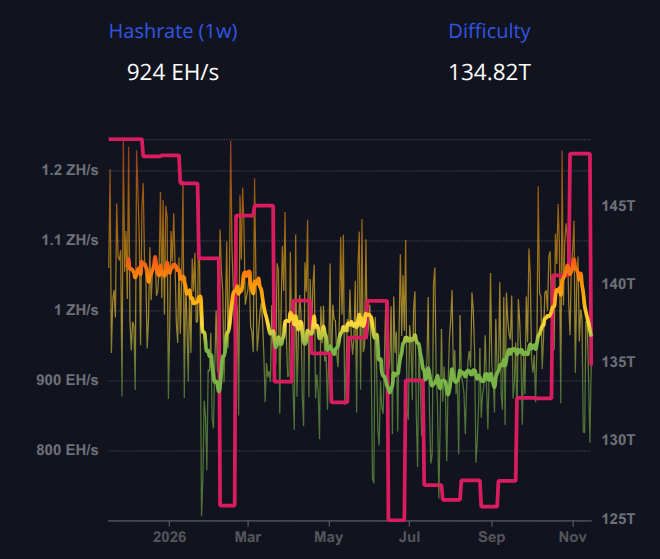
For miners’ economics there was, according to @LightningNewsX, some relief: the difficulty adjustment on November 14 at block 975,744 was minus 9.13 percent. The protocol adjusts, with no bailout package and no press conference.
Floresta Desktop: a node without the command line#
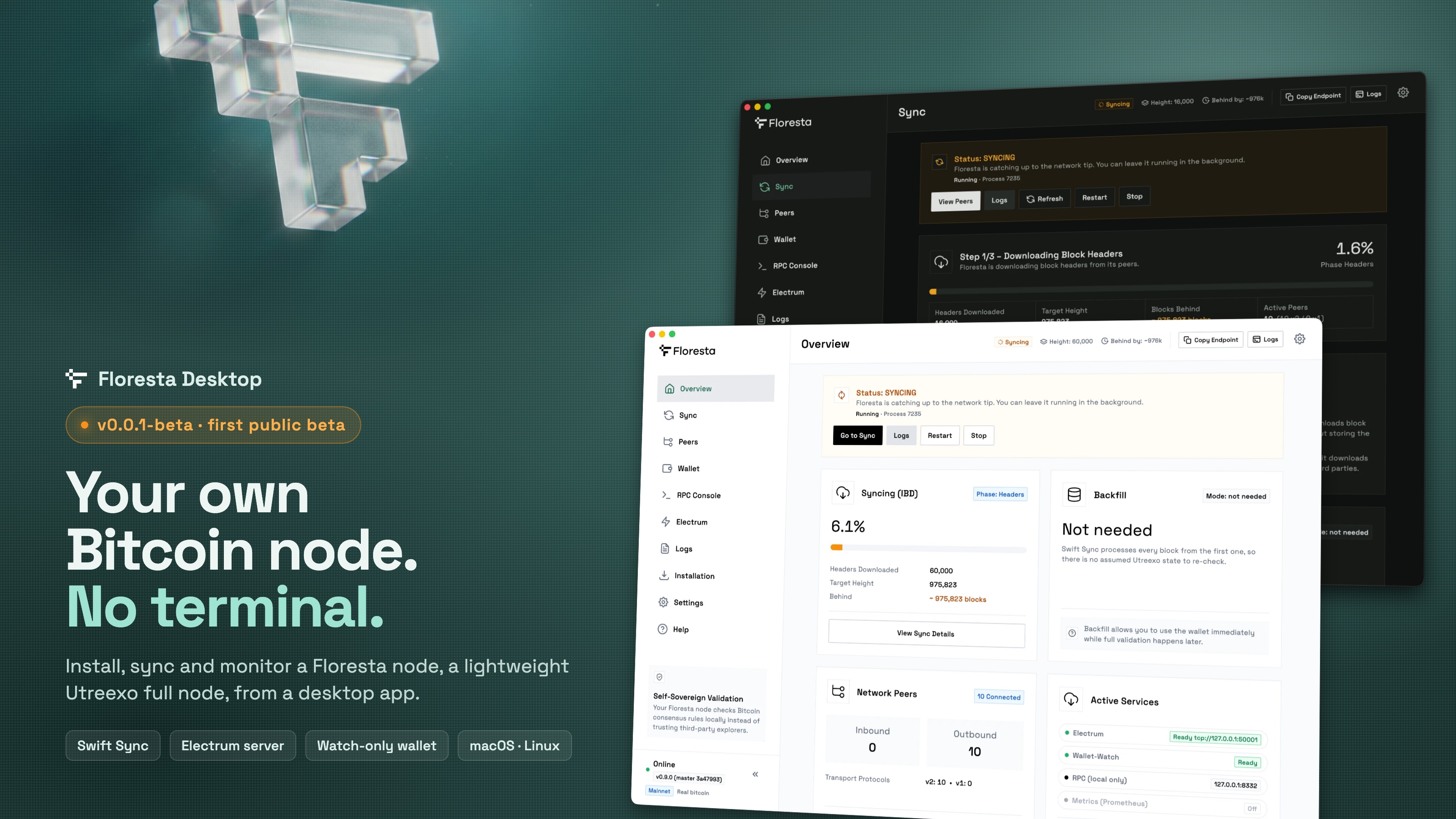
@thesolutchak announced Floresta Desktop v0.0.1-beta – “Run your own Bitcoin node without the terminal.” A setup wizard walks through network, data folder and sync method. “Swift Sync” loads a hint file and processes blocks in parallel, “Fast Start” starts from the built-in Utreexo state. There is also a local Electrum server and watch-only wallets; macOS and Linux are supported. I still couldn’t get it to work; for me the sync is stuck on Utreexo, I don’t have a peer for that.
As soon as that works I’ll write you an article.



Comments
No comments yet. Start the conversation.