

After a week of a tech crash, midterm jitters and billions in outflows from spot ETFs, Bitcoin remains almost unchanged just below $76,000 on Sunday morning. At the same time, Paraguay provides an object lesson in why people turn to stablecoins and Bitcoin during a banking crisis – and Core Scientific shows where parts of the mining industry are heading instead.
The price: weekend calm after the storm#
Bitcoin is trading at $75,802, or €68,005, on Sunday around 06:20 (CET). That corresponds to a decline of around 0.1 percent in 24 hours – practically a standstill. After Thursday’s slide and Friday’s intraday low below $75,000, the market has at least not deteriorated further. But one cannot speak of a recovery either: Bitcoin is down around 13.8 percent since the start of the year, after beginning the year above $87,000.
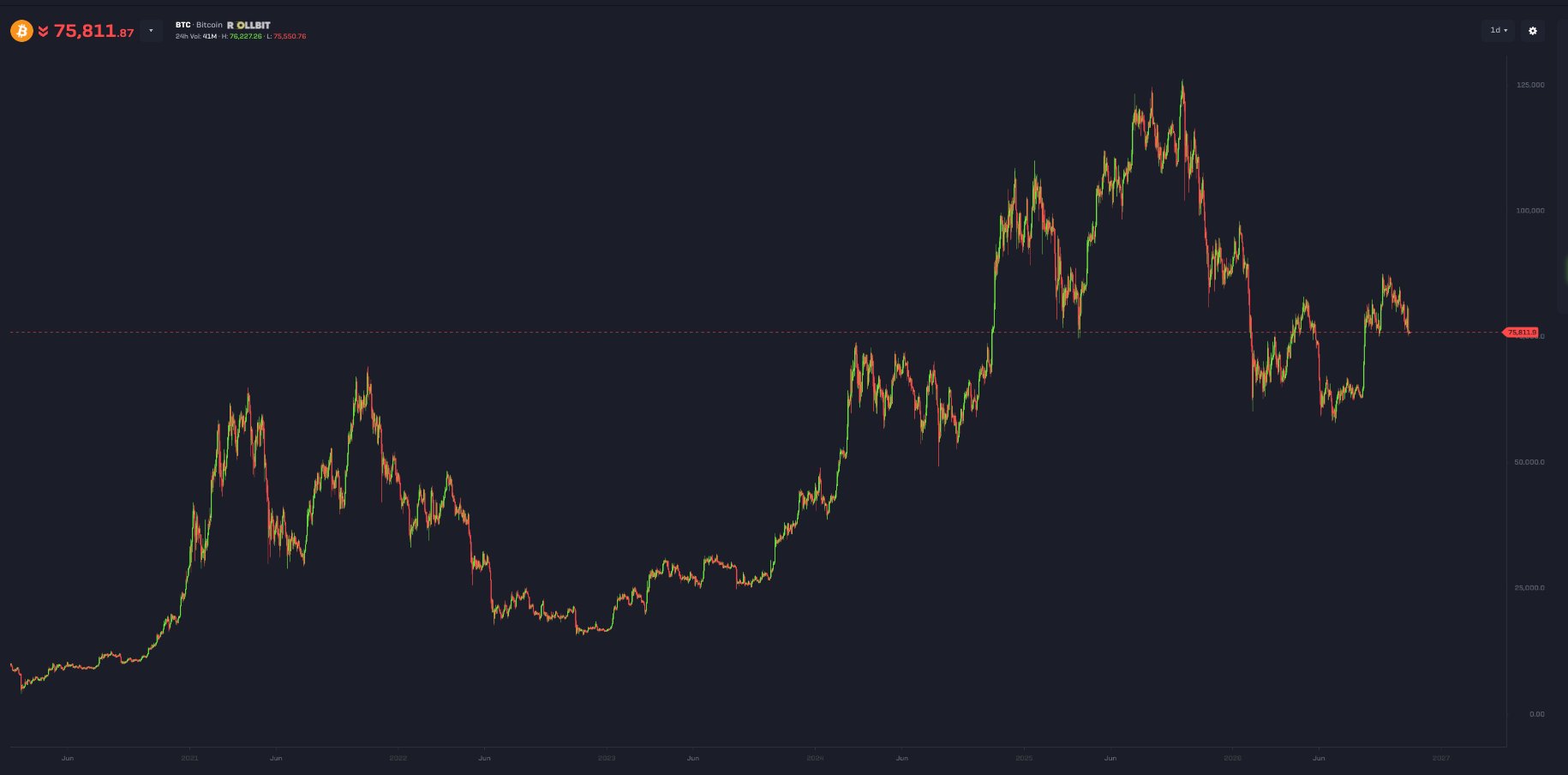
The weekend pattern is noteworthy: without US stock-market trading and without ETF flows, the major drivers are absent. Weekends are therefore often quiet – or, with thin liquidity, suddenly very volatile. This time, calm prevails. According to X-News, the Crypto Fear & Greed Index stands at 25, in the “fear” zone.
ETFs: a week to forget#
The figures for US spot Bitcoin ETFs are stark: on Friday, November 6, net outflows totaled $411.9 million. Almost all of that was attributable to BlackRock’s IBIT, with around $403 million in a single day. Fidelity’s FBTC, by contrast, recorded inflows of $42.8 million. The weekly total shows $1.28 billion in redemptions, while Bitcoin ETF assets under management stood at around $95.9 billion.
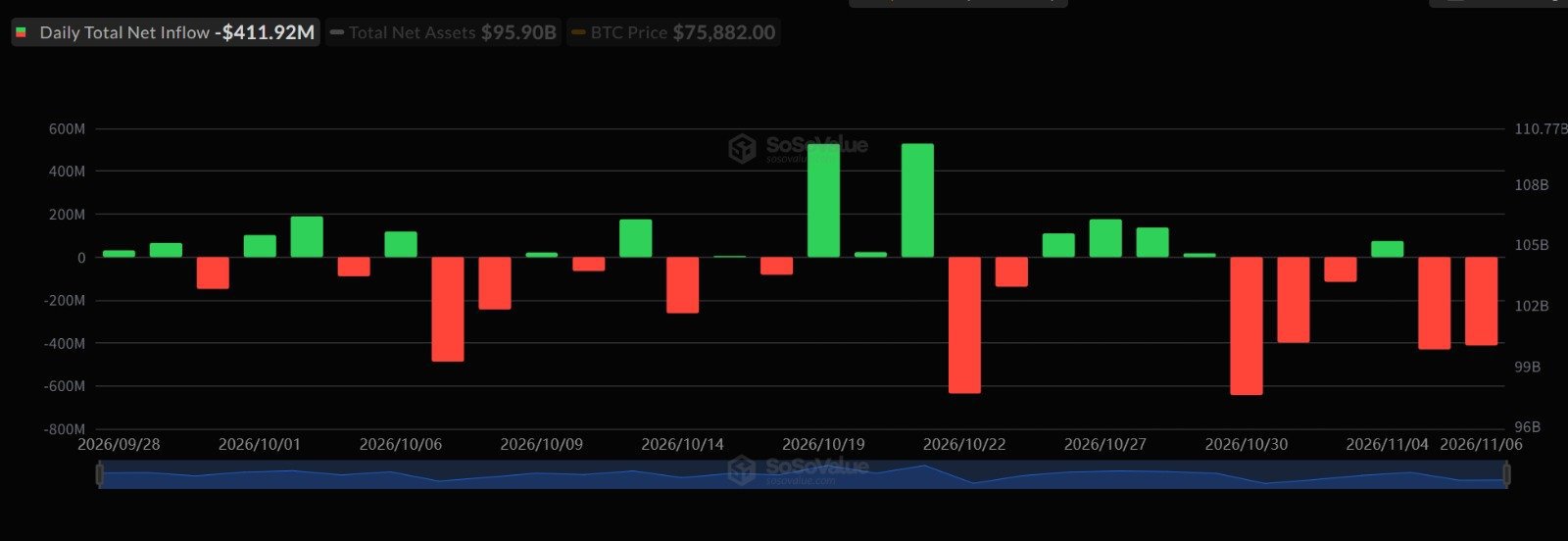
ETF inflows and outflows
Paraguay: when the bank closes#
The real story of the weekend is unfolding in South America. Following the collapse of Ueno Bank in Paraguay, around 60 percent of the adult population is affected, according to Decrypt. The bank reportedly also held $800 million to $850 million in public funds, including pension and health funds. Angry savers burned their bank cards outside its headquarters in Asunción.
The USDT exchange rate in Paraguay rose from 5,692 to over 6,000 guaraníes, while the physical dollar gained more than six percent in interbank trading. Samson Mow commented:
“Tether’s USDT is backed 1:1 and you hold the keys yourself. It is safer than money in a bank, where deposits are held fractionally and can be frozen or restricted.” It is “also the cleanest path to Bitcoin.”
You do not have to share Mow’s view of stablecoins – USDT has a central issuer that can freeze balances. But the core point remains: anyone holding their own keys is not dependent on the fate of a single bank. Bitcoin goes one step further because it has neither an issuer nor a freeze button.
Miners and treasury companies#
Core Scientific intends to exit Bitcoin mining completely by the end of the year. Mining accounted for just $17.5 million, or 7.5 percent of revenue, in the third quarter. The reason is simple: AI customers pay more for power and space than the currently low hashprice.
Conclusion#
The price is resting; the news is not. While Wall Street reduces risk through ETF shares, Paraguay shows what Bitcoin was actually built for: money that no bank can shut down. The practical advantage lies not in the weekly chart, but in control over your own keys.
Tech
Script restoration and solo-mining luck: what is moving Bitcoin tech over the weekend#
Rusty Russell and Julian Moik present an update to the “Great Script Restoration,” a solo miner finds block 974,930, and new details of the Chainalysis attack show once again why fewer third-party providers mean greater security. Also: a training program for one million developers and open AI models that run without a data center.
Great Script Restoration: five building blocks for greater programmability#
According to @btcinsider__, Julian Moik and Core Lightning developer Rusty Russell have published an update to the “Great Script Restoration.” The framework consists of five individual proposals that would be introduced together as a new Tapscript leaf version, 0xc2. “Extended Primitives” and “Reusable Macros” have been newly added.
What does that mean in simple terms? In 2010, Satoshi disabled many commands in Bitcoin’s scripting language for security reasons – such as arithmetic operations on large numbers or concatenating data. Script Restoration aims to bring these capabilities back, but with clear cost limits so that no one can cripple nodes with expensive scripts. Because the whole thing comes as a new Tapscript version, existing scripts remain untouched: anyone who does not use the new functions will notice nothing.
The practical advantage: A richer scripting language could implement things like vaults (safes with delays and emergency cancellation), better inheritance solutions or less-trusted layer-2 bridges directly in Bitcoin – without needing a separate soft fork for every idea. Reusable macros are intended to make scripts shorter and thus cheaper. Whether and when this will arrive remains open; these are proposals under discussion, not agreed changes.
Solo mining: two lucky strikes in one day#
A participant in the Okay Bears project found block 974,930 through solo.ckpool and received 3.07 BTC (over $230,000), which is to be divided among 1,601 holders. On the same November 7, according to the summary, a second solo strike through the same pool also yielded over 3.1 BTC.
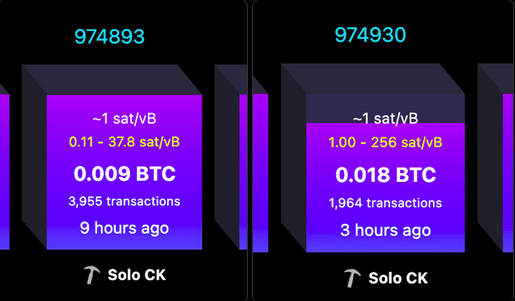
Solo mining is like a lottery with electricity: you compute alone, and only whoever finds the block gets everything. Most miners join pools to receive regular small payouts. But such strikes show something important: anyone with hashrate can find a block and decide for themselves which transactions it contains. That strengthens decentralization – the more independent block builders there are, the harder it becomes to enforce censorship.
Open Source Badge - Bitcoin Amsterdam 2026 Edition
There were really cool open-source badges in Amsterdam; that would certainly be something for  Zitadelle2027 too, Kay should make that happen :-).
It exchanges contact cards with other badges, lights up when someone zaps you, and mines in solo mode.
Comments
No comments yet. Start the conversation.