

Einundzwanzig.tech
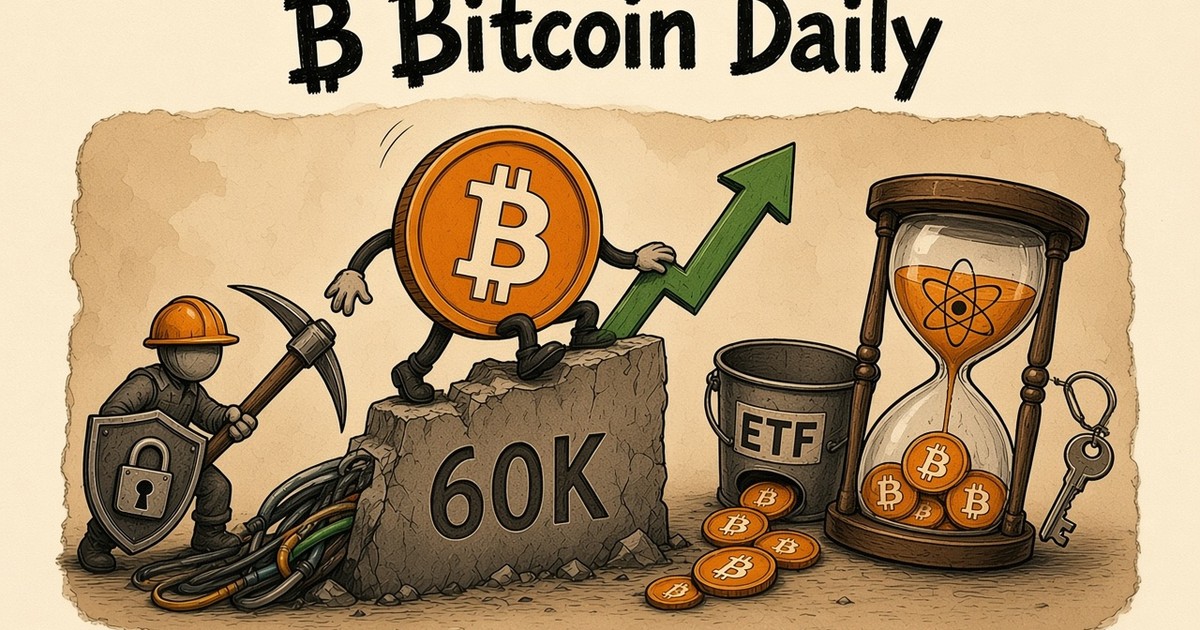
Bitcoin wins back the $60,000 – Galaxy throws in the towel, Burry turns long, and the ETFs keep bleeding
Thursday morning, and Bitcoin has fought its way back above the round mark. The price stands around 6:20 a.m. (CET) at $60,882, or €55,541, a plus of 2.9 percent in 24 hours. In between there was a Wednesday of the kind only markets write that hang on the central bank’s rate needle: hot inflation data, a tech sell-off, a walk-back from Galaxy – and in the end a recovery that was set in motion, of all people, by a notorious pessimist.
The price: a day in the elevator#
According to The Block, Bitcoin fell more than four percent on Wednesday to around $57,300 before it recovered. The weekend low of $55,100 was thereby back within sight. Only in the afternoon (US time) did the mood turn: Bitcoin then recovered by almost $3,000 from the day’s low and crossed $60,000 again.
How tightly Bitcoin currently hangs on the stock markets is shown by the course of the day: the Nasdaq was at times around 4.5 percent in the red and narrowed to about 0.7 percent by the afternoon. The Strategy share, which according to CoinDesk had previously fallen to a multi-year low of $70, also recovered to around $80. In the short term, Bitcoin is thus a tech trade with an orange coat of paint. In the long run, what no share can offer is what counts: 21 million, no annual general meeting, no board.
Why it went down first: inflation, rate fears, ETF outflows#
The trigger of the slide was US inflation data. According to The Block, the PCE index, the Federal Reserve’s preferred inflation measure, rose 3.8 percent year on year. The CME FedWatch tool shows that the market is pricing in a further rate increase of a quarter of a percentage point for the next Fed meeting in two weeks.
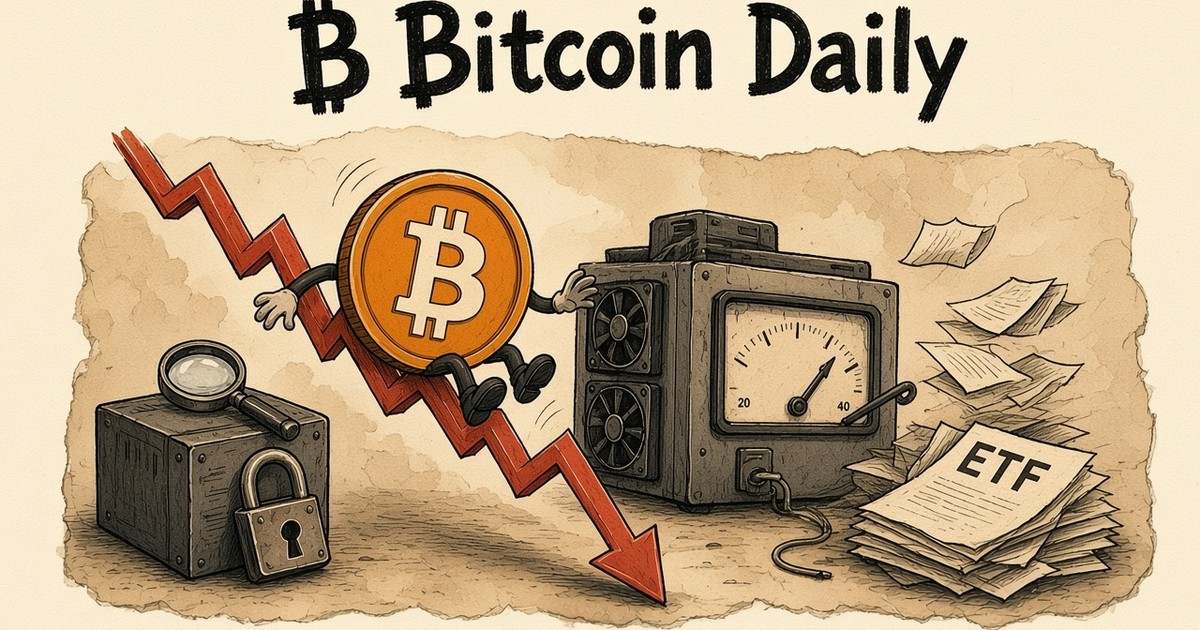
On top of that comes the steady outflow from the spot ETFs. The US bitcoin ETFs lost $453 million on Wednesday, led by BlackRock’s IBIT with $329.7 million. It was the seventh consecutive outflow day; over seven days that adds up to $2.97 billion. Blocktrainer tallies $4.94 billion of outflows for November so far – the worst month since approval. There were inflows on only two trading days at all.
Who said what#
The headline of the day came from Galaxy. Research chief Alex Thorn withdrew the thesis from October that the bear market had ended in June: “We withdraw the October call that the bear market ended in June” and further: “The signal [that call] rested on has failed.”
A counter-voice from CoinShares: research chief James Butterfill said on The Block’s podcast: “I think we're really close to the tail end of the bear market.” He expects a range between $60,000 and $90,000; a breakout above that would need a clear turn in monetary policy. Matt Mena, by contrast, sees the next important line at around $53,000, the realized price; a sustained break below that could, according to CoinDesk, bring $48,500 into play.
And then there was Michael Burry. According to CoinDesk, the long-time tech skeptic told his Substack subscribers that he had sold his remaining put positions on the Nasdaq-100 and is now almost fully long. Shortly afterward the recovery set in – in the Nasdaq and in bitcoin. Whether Burry was the reason or only the signal of how far the pessimists had run is left open.
The mood: extreme fear#
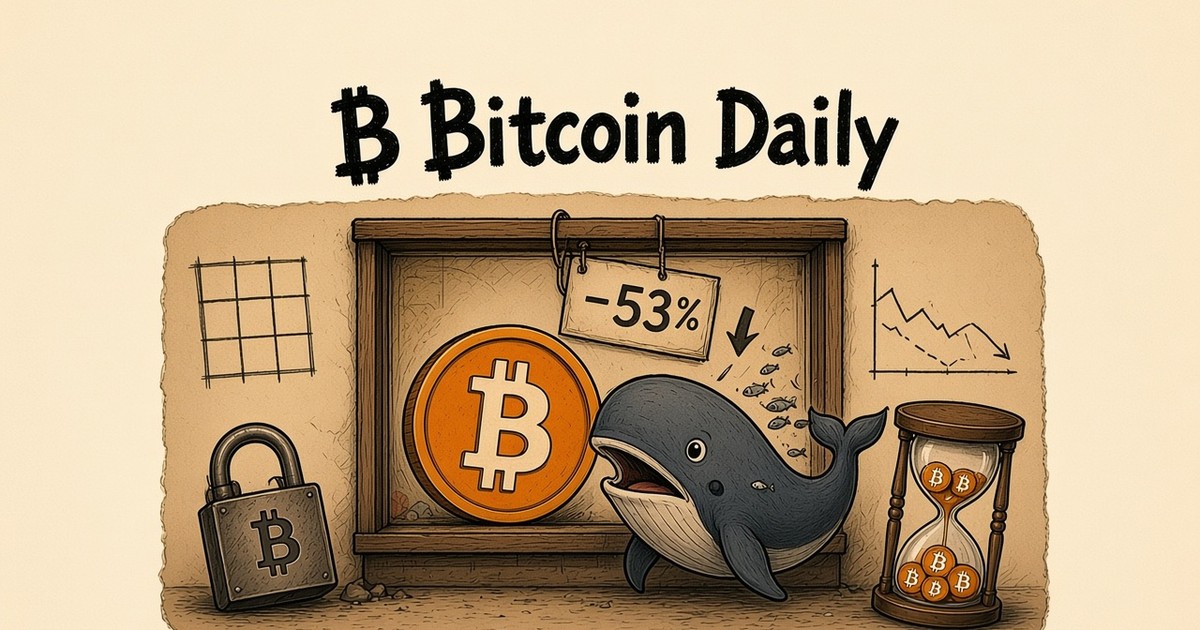
CoinMarketCap shows its in-house Fear & Greed Index at 9 – extreme fear. Bitcoin has lost 30.06 percent since the beginning of October; only 2018 had a still worse fourth quarter, at minus 43.51 percent. Since the start of the year the minus stands at around 36.5 percent; the distance from the record high of $126,080 in October 2025 is about 54 percent. On the options market the ratio of puts to calls is, according to Glassnode analyst AntiFragile, as high as it last was in June 2022. After comparable readings it then took another five months to the bottom. For stackers that means: the discount sale is still running, entirely without a Black Friday coupon.
The state reaches for it#
Two reports from Europe round out the picture. According to CoinMarketCap, the Ukrainian parliament has decided to tax crypto gains from July 1, 2027, at a combined 23 percent – 18 percent income tax plus five percent military levy; the president still has to sign.
What’s ahead#
In the United States today is Thanksgiving, the exchanges remain closed; ETF flows accordingly only return on Friday. What matters, according to Galaxy, is whether bitcoin closes above the June lows on a daily and weekly basis – $58,525 and $59,517. In about two weeks the Fed meets, and the market is pricing in a further rate increase.
Hashrate theft via Stratum V1, fake Electrum servers, and Blockstream’s quantum roadmap
The tech headlines of the day have a common denominator: trust is good, encryption is better. Bitcoin miners were deprived of their hashrate in droves because their protocol from 2012 sends everything in plaintext. At Electrum it is confirmed that the fake servers discovered by 0xB10C are deliberately attacking unpatched servers. And Blockstream recalls that the quantum question, too, is in the end a moving question.
Stratum V1: when the pool is not the pool#
The mining pool Braiins has published a security warning that packs a punch. In November an attacker redirected internet traffic and sent miners who were connected via unencrypted Stratum V1 to a fake pool. Neither the miners nor the Braiins servers were hacked in the process – that was not even necessary. The attacker simply inserted himself into the line, posed as the pool and let the machines compute for him.
The scale is considerable: according to Braiins, on November 20 it hit more than a thousand mining sites in hundreds of networks – in the same second. Public routing data accordingly show that the same technique is aimed at address ranges in which the Stratum endpoints of most of the large pools lie. The weakness is not new: Stratum V1 has sent everything in plaintext since 2012, and a miner cannot check whether his pool is really sitting at the other end. As early as 2014, Dell SecureWorks documented an attacker who diverted around $83,000 in mining proceeds with the same routing trick.
Braiins’ practical rule of thumb: if a pool address in the miner begins with stratum+tcp://, that connection can be hijacked – expressly also for backup pools. The solution is called Stratum V2, or Stratum V1 over TLS on firmware that supports it. ckpool founder Con Kolivas also spoke up: as @btcinsider__ reports, he explains why V1 is vulnerable and recommends switching to Stratum V2, whose encrypted messages prevent hijacking by third parties.
Why this concerns all bitcoiners: Stratum V2 does not only encrypt, it also allows miners to build their own block templates. More security and more decentralization in the same upgrade – rarely can one kill two birds with one stone.
Electrum: the fake servers have a target#
Yesterday we reported on fake Electrum servers that developer 0xB10C had discovered. Now it is clear what they are doing: according to @btcinsider__ it is confirmed that these servers deliver transactions that deliberately target Electrum servers that have not yet been patched against forged transactions in their mempool. The recommendation to all operators: update as quickly as possible. For users the old wisdom applies all the more: anyone who connects their wallet to their own node does not have to believe a foreign server. One’s own node is data protection and a source of truth at the same time.
Quantum: it is about moving, not about the date#
Blockstream has published a workshop excerpt of its research director @n1ckler, recorded at the DAF in New York. The core statement in the post: “Nobody knows when a quantum computer arrives. What matters is moving almost every coin to post-quantum keys, because coins left behind hurt everyone.” Translated: nobody knows when a quantum computer arrives; what matters is that almost all coins move to post-quantum keys, because coins left behind hurt everyone. The thought behind it is simple: coins with vulnerable keys would in the event be a prize whose sale hits the whole market. The debate therefore turns less on physics than on coordination – and in bitcoin that traditionally takes years. Good if it is being had now.

Comments
No comments yet. Start the conversation.